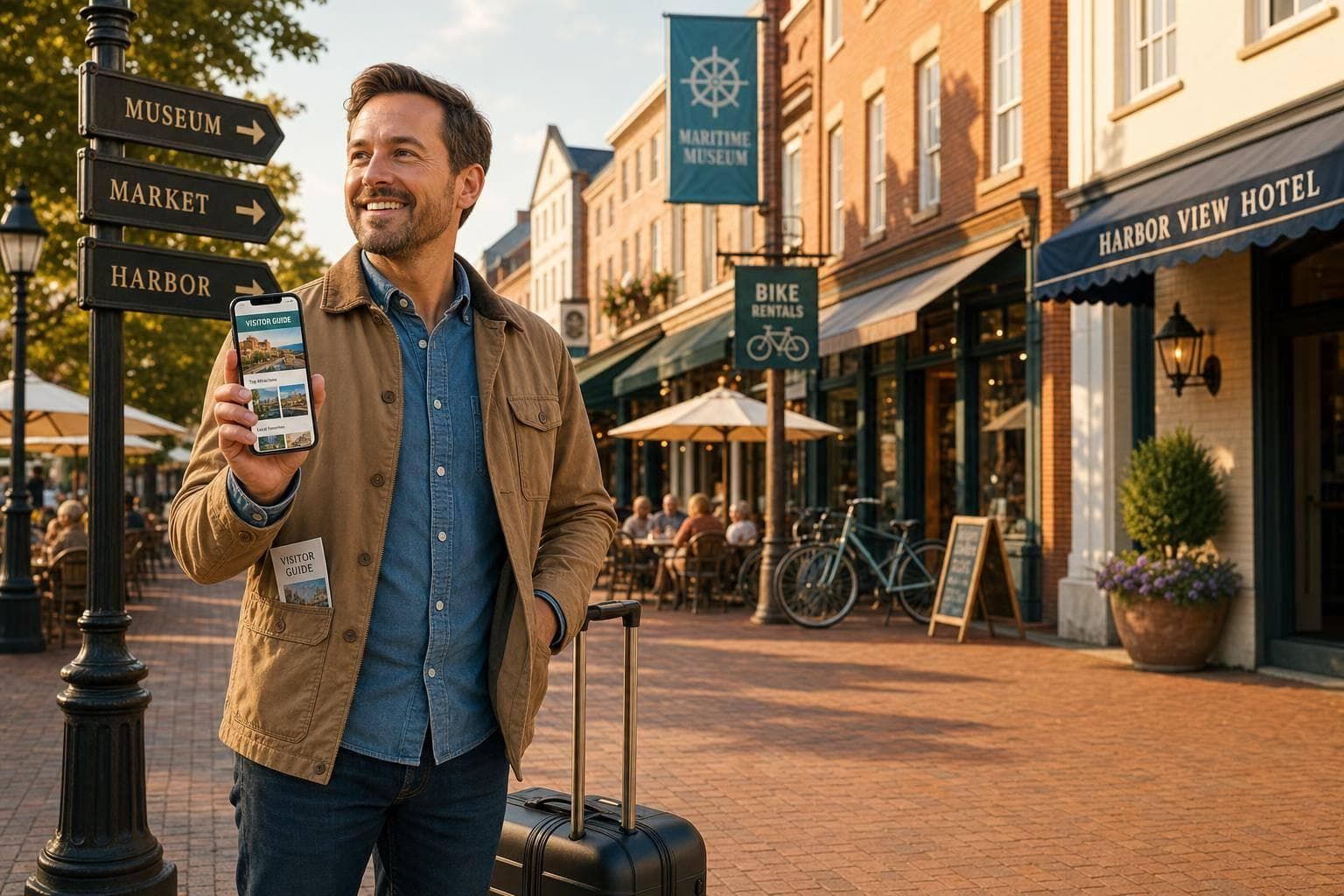
7 Ways a Visitor Guide Boosts Local Tourism
Visitor guides help turn trip interest into visits, bookings, and spending. In the article, I show that official guides can influence 85% of undecided travelers, drive about $48 in direct visitor spending per guide distributed, and push 88% of brochure users to look up more info or book online.
If I boil it down, a visitor guide helps local tourism in seven clear ways:
- Helps people plan trips
- Points them to attractions and events
- Gets more overnight stays
- Sends traffic to local businesses
- Makes getting around easier
- Shapes how people remember the place
- Keeps visitors interested in coming back
A guide works best when print and digital tools work together. Maps, itineraries, QR codes, lodging links, event calendars, and offers all give visitors a simple next step. That is what turns a guide from an information piece into a trip-planning tool.
![7 Ways a Visitor Guide Boosts Local Tourism [Key Stats]](https://assets.seobotai.com/undefined/6a41c1822902db05ecd847f4-1782700500288.jpg)
7 Ways a Visitor Guide Boosts Local Tourism [Key Stats]
Quick Comparison
| Way the guide helps | What it changes | Main result |
|---|---|---|
| Trip planning | People pick the destination and plan sooner | More visits and bookings |
| Attractions and events | People choose more things to do | More tickets, stops, and spending |
| Lodging and itineraries | Day trips shift into overnight stays | More room nights |
| Business listings and offers | People find places to eat, shop, and visit | More local sales |
| Maps and wayfinding | People move around with less friction | More visits across town |
| Branding and stories | People connect with the place | Better recall and return interest |
| Follow-up tools | People stay in touch after the trip | More repeat visits |
In short: a visitor guide does more than list places. It helps people decide, move, spend, and return.
sbb-itb-909066b
Why Visitor Guides Still Matter in U.S. Destination Marketing
Printed visitor guides still play a big role in how people plan trips and find their way once they arrive. In fact, 72% of travelers use brochures, maps, and guides to plan or navigate trips.
Part of the reason is simple: print gives people a focused, hands-on way to discover a place without the noise of screens, pop-ups, and endless tabs. A guide can slow things down in a good way. It helps travelers scan options, spot ideas they might have missed online, and make decisions while they're on the move. That's why visitor guides still shape tourism behavior long after that first search.
Their use doesn't stop when the trip ends, either. 58% of travelers keep guides as mementos, and 95% share them with an average of 2.4 other people. So one guide often reaches far more than one traveler.
Print also carries a high level of trust. 98% of travelers say brochures provide trustworthy information. And when destinations pair print with QR-linked tools, they can connect that trust with up-to-date maps, event details, and booking links that people can act on right away.
Those patterns lead directly to the seven tourism outcomes below.
1. Inspires Trip Planning Before Visitors Arrive
Maps, itineraries, and articles help travelers move from that looks fun to an actual trip plan before they arrive. And readers don’t value every feature the same way. They look for tools that help them picture the visit, not just scan a list of places.
Maps and stories do that job better than plain listings. Maps are the most helpful feature for 82% of guide readers, with articles close behind at 72%. That early spark matters because it often sets the whole trip in motion.
Themed itineraries push that interest a step further. A 48-hour trip, a family weekend plan, or a similar format gives people a simple way to imagine the visit and shape their time around it. Instead of asking readers to build a trip from scratch, the guide gives them a starting point.
Print also nudges people online. QR codes can send readers straight to booking pages, event calendars, and interactive maps. That handoff matters. 88% of brochure users go online to find more information or make a booking after seeing something in print.
Put simply, these features work because they help readers go from interest to action.
| Guide Feature Used | Visitor Behavior Influenced | Tourism Outcome | Example Metric |
|---|---|---|---|
| Themed Itineraries | Pre-trip planning and decision-making | Increased direct visitor spending | $48 return per guide distributed |
| QR Codes & Vanity URLs | Transition from print to digital research | Higher digital engagement and bookings | 88% of brochure users go online for more information or a booking |
| Maps | Faster trip visualization | More confident destination choice | 82% of readers find maps most helpful |
| Seasonal Calendars | Event-driven trip timing | Earlier booking decisions | Ties trip planning to specific dates and activities |
Research on the Ohio Travel Guide adds another layer here. It found that 95% of its 400,000 readers were high-intent readers - people who were already interested in visiting the state. That kind of pre-arrival interest gives chambers and CVBs a clear link between guide content and tourism results.
Once a guide has turned interest into a plan, it can start shaping what visitors choose to see and do when they get there.
2. Highlights Attractions, Events, and Hidden Gems
Once trip planning starts, the guide’s role changes. Now it needs to help people decide where to go.
A visitor guide does more than name attractions. It shapes where people spend their time and money. About 60% of readers chose to visit an attraction or activity because of guide content. That’s a pretty direct link between what appears on the page and what visitors do once they arrive.
This is where curated spreads can do a lot of work. Instead of pushing a single stop, they can connect that stop to nearby places to eat, shop, or book a tour. One museum visit can turn into an afternoon downtown. One trail stop can lead to lunch, coffee, and a local store. That kind of planning helps stretch visits across more businesses.
Smaller businesses can gain from this too. Visit Fort Wayne’s visitor guide includes a dedicated "hidden-gem finder" and a "10 activities under $10" list. Both are built to surface local favorites that might get passed over next to headline attractions. That placement helps family-owned cafes, neighborhood shops, and other local spots get found.
Events work best when the print guide stays tied to live updates. QR codes help keep seasonal calendars current and send readers to live event details, tickets, and bookings. Ryan French, Executive Director & CEO of the South Central Tennessee Tourism Association, puts it this way:
"QR codes mean your story doesn't stop at the edge of a page. They become doorways into videos, itineraries, maps, and events."
That connection lets the guide stay useful even when event details change, while still steering readers to the latest information.
| Guide Feature | Visitor Behavior Influenced | Tourism Outcome |
|---|---|---|
| Curated attraction spreads | Visitors extend single stops into multi-business visits | Higher local spending |
| Hidden-gem finder sections | Traffic is directed to lesser-known spots | Broader distribution of visitor dollars |
| QR-linked seasonal calendars | Event-driven trip decisions | Increased event attendance and bookings |
| Neighborhood maps and clickable pins | Exploration beyond usual hotspots | Trips into secondary districts |
3. Extends Visitor Stays With Lodging and Itineraries
Once visitors know what they want to see, lodging content can turn that interest into a longer stay.
Guide Feature Used
A smart move is to pair lodging listings with 48-hour or weekend itineraries. That shift can turn a day trip into an overnight visit. The Stevens Point Area CVB used this approach in its 2026 guide with a "48 Hours in Point" itinerary that encouraged day-trippers to become overnight guests.
It also helps to organize lodging sections by traveler type, like families, adventure seekers, or wellness travelers. That way, readers can spot options that fit the kind of trip they want to take without digging around too much. Another simple tactic works well too: place hotel ads right next to multi-day itinerary features. When readers are already picturing an overnight stay, the booking option is right there in front of them.
Visitor Behavior Influenced
A central place to stay makes it much easier for people to spend the night and branch out to nearby attractions. A two-day itinerary changes the frame of mind. Instead of thinking in hours, visitors start thinking in nights. That small shift gives them a clear reason to add one more night to the trip.
Tourism Outcome
Longer stays usually mean more spending on dining, shopping, and local activities. And digital guides make that path smoother with direct hotel links and booking buttons, which cut down on friction during the booking process.
Example Metric
| Metric | What It Measures | Tracking Method |
|---|---|---|
| Room nights from guide clicks | Direct lodging conversions | "Book Now" buttons / UTM codes |
| Average stay length | Whether visitors are staying longer | Cell phone / credit card data |
| Itinerary page dwell time | Which multi-day plans hold attention | Digital flipbook heatmaps |
| Clicks to hotel partners | Referral traffic from guide to hotels | QR codes / digital analytics |
Once the overnight stay is booked, the guide can nudge guests toward nearby dining and shopping.
4. Drives Traffic to Local Businesses and Increases Spending
When a guide helps visitors decide what to see, it should also help them decide where to spend money. A smart listing in a visitor guide can reach travelers at the exact moment they're choosing where to eat, shop, or go next. That makes the guide a direct push for local spending.
Guide Feature Used
Dining listings, business directories, and curated shopping sections do most of the work here. A restaurant ad placed next to a walking tour map can turn casual browsing into a stop for lunch. Themed sections like "Best Local Breweries" or "10 Activities Under $10" steer travelers toward places where they can spend money close to where they already are.
QR codes and vanity URLs tied to specific businesses add a trackable link between a printed guide and an in-person visit. That matters because print can feel hard to measure - until someone scans, clicks, or shows up.
Visitor Behavior Influenced
Travelers tend to trust brochure information, which makes them more likely to make unplanned stops and purchases. In fact, 91% of brochure users were influenced to visit a place they hadn't originally planned to see.
That creates room for smaller, family-owned businesses to show up alongside major attractions. A neighborhood café or an independent bookstore can get the same shot at attention as a famous landmark. For many local businesses, that's the whole game: being seen at the right time.
Tourism Outcome
Official DMO guides have been shown to generate about $6.9 million in direct visitor spending. In April 2026, the Ohio Travel Association reported that 95% of the 400,000 readers of the printed Ohio Travel Guide were hot leads.
Example Metric
| Metric | What It Measures | Tracking Method |
|---|---|---|
| Coupon redemption rate | Direct revenue tied to guide | Print-only codes at point of sale |
| QR code click-throughs | Referral traffic to business pages | Unique QR codes per listing |
| Foot traffic to featured businesses | Real-world visits after guide engagement | Cell phone / GPS data tracking |
| Direct spending per guide distributed | Overall economic ROI | ROI modeling / visitor surveys |
Once people decide where to spend, maps and digital wayfinding help keep them moving.
5. Improves Navigation With Maps and Digital Wayfinding
After a guide sparks interest and spending, maps help visitors move through a place with less hassle. Deciding where to spend is one step. Getting there without fumbling with directions is the next.
Guide Feature Used
Print maps and themed walking guides help visitors see more in less time. When a guide is organized by neighborhood or built around a trail, like a "48 Hours" itinerary or a Brewery Trail, it gives people a simple half-day plan without forcing them to search on their phone the whole time.
That matters because maps are rated as the most helpful type of visitor guide content by 82% of readers. People still want clear, easy wayfinding. It takes the guesswork out of getting around.
QR codes make print maps do more. A visitor can scan for turn-by-turn directions, itineraries, or live event details right from the page. Lunar Cow Publishing's iMap 3.0 adds GPS mapping, itinerary building, and points of interest listings, all on the destination website.
Visitor Behavior Influenced
Printed maps still do their job when cell service drops. QR codes fill in the gap by sending visitors to digital details when they need them. That mix of print and mobile works well because 88% of brochure users went online to find more information or make a booking based on something they saw in a printed guide.
A map helps someone move through the destination. A QR code helps them take the next step.
Tourism Outcome
Better navigation helps visitors cover more ground. When travelers can picture what is nearby, they're more likely to make unplanned stops at secondary businesses and hidden gems they may have skipped otherwise.
That means more movement across the destination, not just the main tourist core. Secondary districts get more foot traffic. Hidden-gem stops get seen. And the trip tends to feel smoother from start to finish.
Example Metric
| Navigation Tool | What to Track | How to Measure It |
|---|---|---|
| Print maps with QR codes | QR scans to directions | Unique QR scans and click-throughs |
| iMap 3.0 / interactive digital maps | Itinerary builds | Platform analytics and heatmaps |
| Themed walking guides | Visits to featured stops | Cell phone or GPS location data |
| Neighborhood-based listings | Engagement by neighborhood page | Flipbook heatmaps |
6. Strengthens Destination Branding and Storytelling
Navigation helps people get around. Branding shapes the memory. It affects how visitors feel about a place before they arrive, while they’re there, and after they head home.
Guide Feature Used
Once a guide helps visitors find their way, it starts doing something else: it helps shape the story they carry with them.
Modern visitor guides tend to work better when they read more like magazines than plain directories. Editorial content plays a big part here. 72% of readers say editorial articles are helpful, while fewer than 50% put the same value on standalone listings. Strong photography and a steady visual style also matter, because they make the guide feel like one story instead of a stack of disconnected pages.
Visit Temecula Valley took this route by turning its guide into a magazine-style publication centered on local winery and restaurant owners. That kind of story-led approach helps build recognition before the trip, during the visit, and after it ends.
Visitor Behavior Influenced
Good stories and striking imagery can move someone from maybe to let’s book it. In fact, about 85% of undecided travelers said visitor guide content influenced their final decision to visit a destination.
Tourism Outcome
Story-led branding can turn first-time interest into repeat intent. Effective destination branding supports return visits and word-of-mouth referrals. When a place has a clear story, visitors have something to connect with, talk about, and come back to.
Example Metric
| Branding Element | What to Track | How to Measure It |
|---|---|---|
| Editorial storytelling | Reader engagement with feature articles | Flipbook analytics and engagement heatmaps |
| Photography and cover design | Guide pickup and request rates | Distribution counts and digital download requests |
| Consistent brand voice across pages | Repeat visits and referrals | Repeat visitation and referral tracking |
| QR-linked brand content | Click-throughs from print to digital | Unique QR scans and landing-page tracking |
7. Encourages Repeat Visits and Ongoing Engagement
A visitor guide can keep doing its job long after the trip ends. Good branding sticks in people’s minds, and that memory can nudge them toward another visit.
Year-round event calendars and QR links give people a reason to come back, join updates, and keep following the destination after they leave. The same guide that helps someone plan a first trip can also spark the next one.
Guide Feature Used
Seasonal calendars and QR-linked follow-up help keep a destination top of mind after visitors head home. A full-year events calendar gives current visitors a clear reason to return, whether that’s a fall arts festival, a winter market, or a spring trail opening.
Return-trip ideas, seasonal calendars, and QR links to event alerts help extend the guide’s value beyond the first stay.
Visitor Behavior Influenced
QR codes can move readers into email updates, event alerts, and social follow-up, where they stay connected after they go home. That continued contact can turn a single trip into an ongoing relationship with the destination.
Tourism Outcome
This can turn one-time visitors into repeat guests and referral sources who share the destination with others.
Example Metric
These actions can be tracked through scans, sign-ups, and redemptions.
| Engagement Feature | What to Track | How to Measure It |
|---|---|---|
| QR codes linked to live calendars | Unique scans per code | QR tracking dashboards |
| Return-trip offer codes | Code redemptions at partner businesses | POS redemption logs |
| Seasonal events calendar | Repeat-trip intent | Intercept surveys at visitor centers |
| Digital guide analytics | Page engagement and click-throughs | Flipbook heatmaps and CTR reports |
Connecting Guide Features to Tourism Outcomes
When you line up the seven benefits above, the pattern gets pretty clear: each guide feature should lead to a result you can track. That might mean longer stays, higher visitor spend, more attraction visits, or repeat engagement. And those results show up in both spending data and visitor behavior.
The table below shows how each feature connects to an outcome and a metric.
| Guide Feature | Tourism Outcome | Tracking Metric |
|---|---|---|
| Weekend itineraries | Longer stays, room-night growth | Itinerary saves, hotel occupancy data |
| Interactive maps | Better visitor flow, more attraction visits | Map taps, navigation clicks |
| Restaurant and lodging listings | Higher local spending, partner engagement | "Book Now" clicks, ad participation |
| Coupons and trackable offers | Direct attribution of local spending | Redemption rates, average visitor spend ($) |
| QR codes | Links print to digital action | Scan rate, click-through rate, booking conversions |
| Event calendars | Seasonal attendance | Ticket sales, calendar clicks, download requests |
| Email and social CTAs | Repeat travel, ongoing engagement | New email sign-ups, social follows |
As Will Lubaroff, Marketing Copywriter at Walsworth, puts it:
"Print starts the journey. Digital closes the loop."
That idea is simple, but it matters. A reader might pick up a guide, scan a QR code, click through to a booking page, and make a reservation. Each step in that path can be tracked, from scan to conversion.
The next section shows which print and digital tools make those results easier to measure.
Print and Digital Tools That Support the Seven Benefits
A visitor guide works best when print and mobile tools support the same trip. Those seven benefits don’t happen by accident. They rely on a simple print-to-digital toolkit working behind the scenes.
On the print side, Lunar Cow offers visitor guides, community maps, and business directories through their specialized publishing services, alongside travel brochures. Each one lines up with a specific job: planning, discovery, lodging, spending, navigation, branding, and repeat visits.
Digital versions turn those print touchpoints into actions you can track. GoGuide is a web-hosted digital version of the guide with responsive design, live updates, and analytics, so DMOs can see which pages get the most attention and adjust marketing based on that data.
For destinations that need more help with navigation, iMap 3.0 adds turn-by-turn directions, itinerary building, a calendar of events with recurring listings, and points of interest panels. Those panels may include photos, videos, business descriptions, and digital coupons. Visitors can plan trips, view details, and share itineraries from their phone.
Community maps help with wayfinding, and QR codes link print maps to live directions, events, and itineraries. Put together, these tools connect guide content to tourism results that can be measured.
Conclusion
A visitor guide is a tourism sales tool, not just a brochure. And that shows up in visitor behavior you can measure.
It works because the guide gives travelers a clear next step at each part of the trip - from booking a hotel room to picking a restaurant to following a walking route.
That impact isn’t vague. Official DMO guides can generate an estimated $48 in return per guide distributed because they turn interest into booking, dining, and wayfinding actions.
For chambers and CVBs, the takeaway is simple: make the guide easy to scan, easy to use, and easy to act on, and it can become a long-term tourism asset.
FAQs
How do you measure a visitor guide’s ROI?
Measure a visitor guide’s ROI by tracking how it changes trip behavior and visitor spending. The main numbers to watch are incremental trips, longer stays, and direct visitor spending tied to people who read the guide.
Digital tools can help fill in the picture. You can track engagement heatmaps, click-through rates for local business partners, and conversion rates from guide readers to actual visits. That gives you a clearer view of what the guide is doing beyond simple distribution numbers.
Studies show an industry average ROI of $48 in direct visitor spending for every $1 spent.
What should every visitor guide include?
Every effective visitor guide should move people from interest to action. It should help them plan with confidence, not leave them flipping pages and guessing.
That means including clear maps, themed itineraries, honest photography, and QR codes that link the print guide to live event calendars, booking pages, and up-to-date business listings. Print still matters, but it works best when it connects people to what’s happening right now.
The guide should also tell one clear brand story, make navigation simple by theme, and carve out space for local hidden gems. That’s often the part people remember most - the small spots, side streets, and local favorites that make a place feel worth the trip.
How do print and digital guides work together?
Print and digital guides work best as a connected system.
Print gets people interested fast. It gives them a tactile, distraction-free way to look through local attractions without bouncing between tabs, apps, and notifications. There’s something simple about flipping through pages that still works.
Digital picks up where print leaves off. It adds live updates, deeper details, and more ways to engage once someone wants to take the next step.
That connection matters. QR codes, vanity URLs, and trackable offers can turn a printed page into a direct path to live event calendars, booking engines, and expanded online itineraries. So the guide doesn’t stop at the page - it keeps going online, where visitors can get the latest info and make plans on the spot.